C. uttarpradeshensis Singh & Kulshrestha 1976Adult: Redescribed by Maheshwari, 1989, who notes that the original description actually described the female of C. bharati by mistake.Body length 5.29 (5.19-5.40) mm. Wing length 2.80 mm; VR 1.09. Yellowish brown, tibial apex black, abdominal terga II-V with black marking. Hypopygium light-brown. Head - AR 2.6; frontal tubercles 41.5 µm; palp proportions 14 : 13 : 33 : 20 : 40 : P5/P4 2.0, P5/P3 1.21. Leg lengths (microns) and proportions:
 Male hypopygium of C. utterpradeshensis (Madeshwari, 1989) Male hypopygium of C. utterpradeshensis (Madeshwari, 1989)Female:  Female genitalia of C. uttarpradeshensis (Madeshwari, 1989) Genitalia as in figure. GCIX with 2-3 setae; segment X with 11-12 setae. Pupa: Body length 5.00-5.40 mm; abdomen pale brown. Respiratory organ with four branches; anterior trunk larger than posterior trunk. TII (not TIII as stated) with a row of hooklets (not counted), spur of segment VIII with two pointed spines. Fourth instar larva: length 9.00-9.84 mm; ventral tubules present, but no details; head capsule with a pair of dorsolateral stripes originating from the median strip; length 0.57 mm and width 0.46 mm. Pecten epipharyngis with single row of teeth, figure shows 11 teeth of type B.Mentum shown as type I-II, but 4th lateral very closely attached to 5th laterals and separated from 6th laterals, central tooth appears to be type IIA. Antenna: RO in basal half of A1, 25 µm up from base; antennal blade reaching apex of A4; A3 smaller than A4, A5 smallest, AR 1.83. Mandible triangular, appears 4th inner tooth about type I; pecten mandibularis well developed but no mention of presence of furrows. Premandible with 2 teeth, inner tooth shown about 4x wider, possibly Ty. B2. 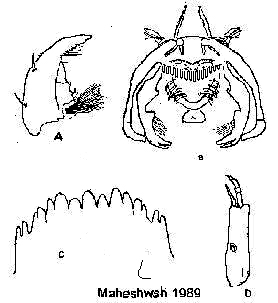 Larval mouthparts of C. uttarpradeshensis (Madeshwari, 1989) a. Mandible; b. Labrum; c. Mentum; d. Antenna Cytology: not known. Found: INDIA - Type locality - Khanari Agricultural Farm, Agra, Uttar Pradesh. Larvae in mud and coarse sand at bottom of water tanks and other lentic waterbodies. |
Modified: 18 May 2026
Access: Unrestricted
Copyright © 2019-2026, Jon Martin.